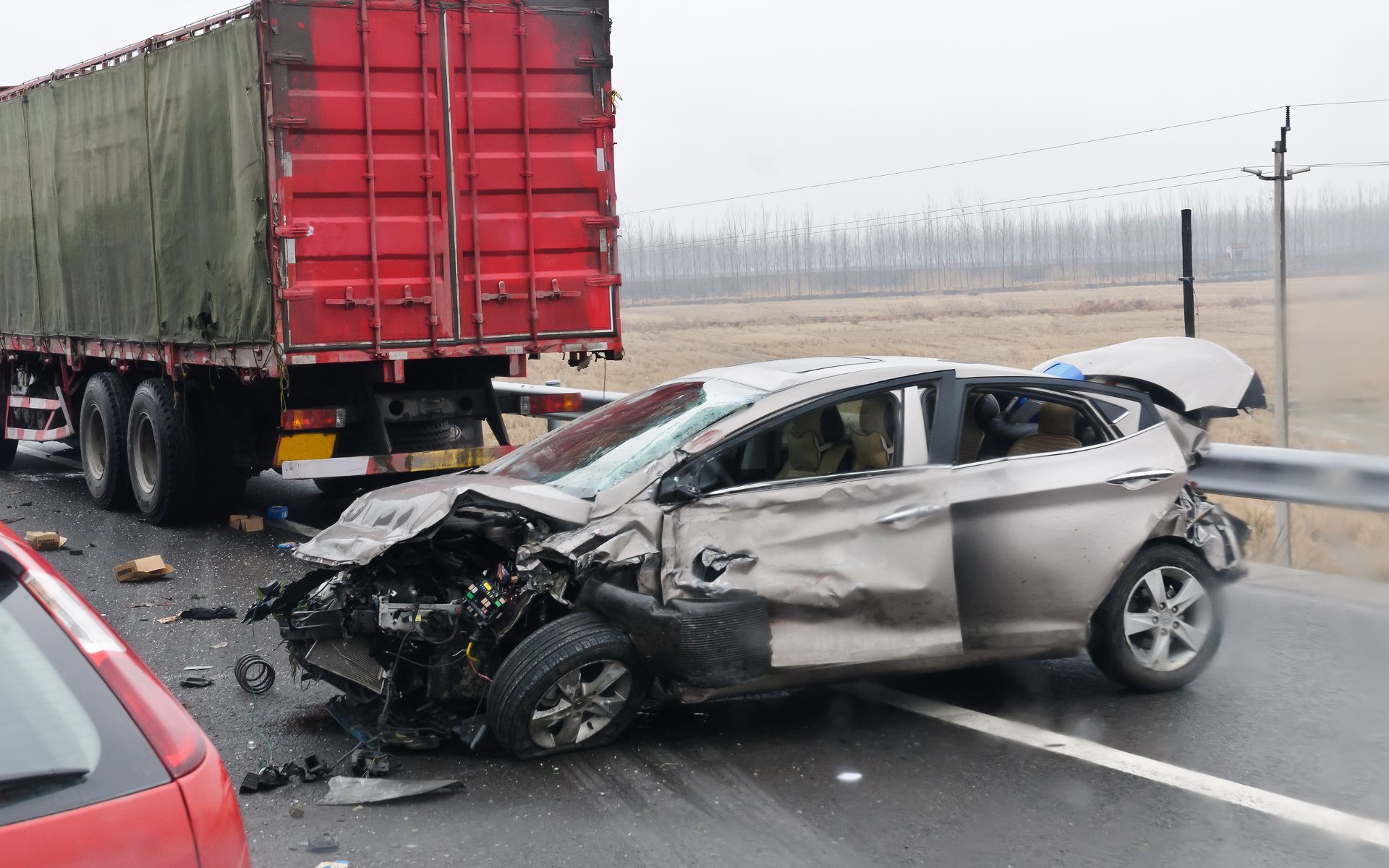
When a commercial truck loses control on Arkansas highways, the consequences can be devastating. Underride collisions, jackknife incidents, and rollover crashes are among the most dangerous truck accidents in the state, often causing traumatic brain injuries, spinal cord damage, severe burns, and other life-altering harm. In these high-impact cases, working with a major personal injury lawyer in Arkansas who understands trucking litigation can be critical to protecting your rights and documenting the full scope of your losses.
At Gates Law Firm, PLLC, Little Rock truck accident attorney Joseph Gates knows these claims aren’t like routine crashes. Liability may involve the driver, trucking company, maintenance crews, cargo loaders, or parts manufacturers, and proving fault requires a fast, thorough investigation. If you or a loved one has been affected by an underride, jackknife, or rollover wreck, call Gates Law Firm, PLLC at (501) 779-8091 to discuss your case and pursue the compensation you deserve.
The Scope of Truck Accidents in Arkansas
Arkansas has an extensive highway system with over 16,000 miles of roads, and areas like the I-40, I-30, and I-530 corridors see frequent crashes involving large commercial trucks. In Little Rock, the I-30/I-430 interchange consistently ranks among the state’s most dangerous trucking zones, with the merging lanes and sharp curves creating hazardous conditions for commercial vehicles. The I-40 corridor through North Little Rock also experiences heavy truck traffic, particularly near the Port of Little Rock, where freight haulers transport goods to and from the Arkansas River terminals.
These crashes are more than roadway incidents; they disrupt lives in an instant. Families can be left grieving, workers may be unable to return to their jobs, and victims often face long-term medical treatment and rehabilitation at facilities such as UAMS Medical Center, Baptist Health Medical Center–Little Rock, and CHI St. Vincent Infirmary. The unique characteristics of underride, jackknife, and rollover accidents make them especially dangerous and legally complex, often requiring a deeper investigation into how and why the collision occurred.
Underride Accidents: The Most Catastrophic Truck Collisions
Underride accidents occur when a smaller vehicle slides beneath the body or trailer of a large commercial truck. Because commercial trucks ride high off the road at heights significantly higher than average passenger vehicles, their bumpers do not align with those of standard cars.
The results are often catastrophic. When an underride accident occurs, the roof of the car can be sheared off, destroying the structural integrity of the occupant cabin and disabling the airbags. Victims frequently suffer severe head trauma, including traumatic brain injuries, skull fractures, and, in the most tragic cases, fatal injuries.
Types of Underride Collisions
There are three primary categories of underride accidents:
- Rear Underride Accidents: These occur when a passenger vehicle collides with the back of a truck and slides underneath the trailer. Common causes include sudden truck braking, following too closely, or distracted driving by either party.
- Side Underride Accidents: When a smaller vehicle impacts the side of a truck or trailer and becomes trapped underneath, side underride accidents are frequently caused by intersection collisions, U-turns, and negligent merging. In Little Rock, intersections along Cantrell Road, Chenal Parkway, and Colonel Glenn Road have seen these types of collisions where trucks make wide turns and passenger vehicles become trapped.
- Front Underride Accidents: Also known as “override” accidents, these happen when a truck drives over a smaller vehicle, typically due to following too closely or brake system failures.
The Reality of Underride Statistics
From 2008 through 2017, an average of about 219 fatalities from underride crashes involving large trucks were reported annually. However, crash experts believe these numbers significantly underreport the actual frequency of crashes. Police officers responding to a crash do not use a standard definition of an underride crash, and states’ crash report forms vary, with some not including a field for collecting underride data.
Federal Safety Requirements and Their Limitations
While federal regulations require rear underride guards on trucks, the U.S. Department of Transportation doesn’t include guards for the sides of commercial trucks, and some types of large commercial trucks are exempt from the requirement, including single-unit trucks, box trucks, garbage trucks, and dump trucks.
Joseph Gates – Truck Accident Lawyer in Arkansas

Jackknife Accidents: When Trucks Fold Like Pocket Knives
Jackknifing occurs when the trailer of a tractor-trailer folds up against the cab, creating a “V” shape that resembles a pocketknife. This happens when the cab’s tires lock up while the trailer continues moving, or when the drive tires lock but the trailer’s momentum pushes the cab forward.
Common Causes of Jackknife Accidents in Arkansas
Jackknife wrecks are rarely “just accidents.” In many cases, they trace back to a specific breakdown in safety, whether that’s driver error, poor maintenance, or hazardous roadway conditions. Knowing the cause is essential because it often reveals who should be held responsible for the crash and the resulting injuries.
- Improper Braking Techniques: Commercial trucks have multiple braking systems for the drive axle, steering axle, and trailer axles. Truck drivers need to be well-trained in braking techniques for various conditions, and an inexperienced driver might apply improper brakes and cause the vehicle to skid.
- Excessive Speed: Speeds of 55 mph or higher increase the odds of a truck jackknifing. When trucks travel too fast, stopping safely becomes exponentially more difficult. This is particularly dangerous on Little Rock-area highway ramps, such as the I-630 exit ramps near University Avenue and the I-430 exits near Rodney Parham Road, where trucks must reduce speed quickly.
- Hazardous Road Conditions: Rain, snow, ice, or debris on Arkansas roadways can cause trucks to lose traction and slide out of control. The elevated sections of I-30 through downtown Little Rock become especially treacherous during winter weather events.
- Improper Loading: A heavy or unbalanced load can make the trailer less stable, increasing the risk of a jackknife accident. The shifting of improperly secured cargo puts trucks at significant risk.
- Equipment Malfunction: Brake failures, tire blowouts, and other mechanical issues can trigger jackknife incidents, especially when proper maintenance has been neglected.
The Devastating Impact
When a jackknife occurs on an Arkansas highway, the consequences extend far beyond the truck itself. The jackknifing motion can also result in the truck rolling over, especially when the truck is traveling at high speeds or on slippery road conditions. The accident often creates a sudden roadway blockage, leading to multi-vehicle pileups with catastrophic results.
Rollover Accidents: When Physics Becomes Deadly
All vehicle rollovers can be divided into two categories: tripped and untripped. A tripped rollover is caused by contact with an obstruction in the road, like a curb, ditch, or guardrail, while an untripped rollover is caused by the forces that affect a truck during a turn: centrifugal force, centripetal force, and gravity.
Driver Error as the Primary Culprit
Although rollovers can involve mechanical problems or roadway hazards, driver decisions are still at the center of many Arkansas truck rollovers. Even a momentary lapse, like braking too hard mid-turn or steering aggressively to avoid a hazard, can shift the truck’s weight and trigger a catastrophic tip-over. When that happens, the consequences often extend beyond the truck itself, crushing smaller vehicles, blocking multiple lanes, and causing chain-reaction collisions.
Contributing Factors to Rollover Accidents
Rollover crashes don’t usually come down to one single issue. Instead, they’re often the result of multiple risk factors combining at the worst possible moment, turning a routine drive into a life-threatening event.
- Taking Curves Too Fast: A truck is six times more likely to have a rollover accident on a curved road than on a straight road. This is particularly relevant in Arkansas, where highway on-ramps and off-ramps present significant risks.
- Adverse Weather Conditions: Trucks are three times more likely to rollover in adverse weather than in good weather.
- Driver Fatigue: Exhausted drivers have slower reaction times and impaired judgment, increasing the likelihood of making critical errors that lead to rollovers.
- Improper Loading and Weight Distribution: Cargo that’s improperly loaded or exceeds weight limits raises the truck’s center of gravity, making it more susceptible to tipping.
| Accident Type | How It Happens | Common Injuries |
|---|---|---|
| Underride accidents | A passenger vehicle slides underneath the rear, side, or front of a commercial truck due to height differences | Traumatic brain injuries, spinal cord injuries, severe head trauma, fatal injuries |
| Jackknife accidents | The trailer swings outward and folds against the cab after loss of control | Multi-vehicle collision injuries, crush injuries, burns, spinal injuries |
| Rollover accidents | The truck tips onto its side or roof during a turn, sudden maneuver, or loss of balance | Crush injuries, amputations, spinal cord injuries, internal organ damage |
Catastrophic Injuries: The Human Cost
The injuries sustained in underride, jackknife, and rollover accidents represent some of the most severe outcomes in personal injury law. These aren’t minor incidents that heal with time; they’re life-altering events that fundamentally change victims’ futures.
Traumatic Brain Injuries
Large commercial truck accidents can result in traumatic brain injuries, which occur when the head sustains a forceful impact or undergoes rapid acceleration and deceleration. These injuries range from concussions to severe brain trauma, causing cognitive impairment, memory loss, personality changes, and emotional disturbances.
Victims often require ongoing medical treatment and rehabilitation therapy at specialized facilities like the UAMS Neuroscience Institute or Arkansas Rehab in Little Rock, and may never regain their previous cognitive function. The financial burden extends beyond immediate medical care to include lifelong assistance and lost earning capacity.
Spinal Cord Injuries
About 12,000 new spinal cord injuries are reported annually, and about a quarter-million people are living with spinal cord injuries in the United States. These injuries can result in partial or complete paralysis, depending on the location and severity of the spinal damage.
Spinal cord injury victims often receive emergency treatment at Level I trauma centers like UAMS Medical Center in Little Rock before facing extensive rehabilitation at Arkansas Rehab or other specialized facilities. They need mobility devices, home modifications, and often require round-the-clock care. The lifetime cost of treating a severe spinal cord injury can exceed millions of dollars.
Other Catastrophic Injuries
Victims of these truck accidents also suffer from:
- Severe burns when fires or explosions occur
- Multiple bone fractures and crush injuries
- Internal organ damage and internal bleeding
- Amputations requiring prosthetics and extensive rehabilitation
- Facial injuries and disfigurement
- Neck injuries, including whiplash and cervical fractures
The Web of Liability in Arkansas Truck Accidents
One of the most challenging aspects of underride, jackknife, and rollover truck accidents is determining who bears legal responsibility. Unlike simple car accidents, truck accidents often involve multiple potentially liable parties.
The Truck Driver
If driver error, negligence, or violations of federal regulations caused the accident, the driver bears primary responsibility. This includes cases involving:
- Speeding or reckless driving
- Distracted driving (phone use, eating, etc.)
- Driving under the influence of drugs or alcohol
- Violating hours-of-service regulations leading to fatigue, and improper braking techniques
The Trucking Company
A trucking company may be held vicariously liable for errors by a driver if the truck driver was an employee of the company and caused the accident while on the job. Companies can also be directly liable for:
- Negligent hiring practices (failing to properly vet drivers)
- Inadequate training programs
- Pressuring drivers to violate safety regulations or hours-of-service rules
- Failing to properly maintain vehicles
- Inadequate supervision of drivers
Cargo Loaders and Shippers
Improperly secured or unbalanced loads can cause rollovers or jackknife accidents. If a third party loaded the trailer negligently, creating an improperly balanced or unsecured load, they may share liability.
Maintenance Companies
Independent repair shops that fail to properly inspect or repair critical components may be held accountable if their negligence contributed to the accident.
Parts and Vehicle Manufacturers
If defective equipment, such as faulty brakes, defective tires, or inadequate underride guards, played a role in the crash, Arkansas product liability laws allow injured parties to seek compensation from manufacturers.
Other Motorists
In some cases, the actions of other drivers on the road contribute to truck accidents. If another motorist’s negligence created the conditions that led to the truck losing control, they may share liability.
Arkansas’ Modified Comparative Fault Rule
Arkansas follows a modified comparative negligence rule, meaning liability can be shared among multiple parties. Understanding this rule is critical for truck accident victims.
In Arkansas, the modified comparative fault rule applies when an accident victim is found to be 49 percent or less at fault for the crash. If the accident victim is at least 50 percent liable for the collision, they cannot pursue damages from other involved parties.
This means if you’re found to be 20% at fault, you can still recover 80% of your damages. However, if you’re deemed 50% or more at fault, you’re barred from recovering any compensation.
This rule makes it critical to work with experienced legal counsel who can effectively counter insurance company attempts to shift blame onto victims. Insurance companies often try to assign greater fault to victims to reduce their liability exposure.
Federal Regulations Governing Commercial Trucking
Commercial trucking is one of the most heavily regulated industries in America. The Federal Motor Carrier Safety Administration oversees safety standards that include:
- Hours-of-service limitations preventing driver fatigue
- Drug and alcohol testing requirements
- Commercial driver’s license standards
- Vehicle maintenance requirements
- Cargo securement regulations
- Weight limit restrictions
When trucking companies or drivers violate these regulations, it provides powerful evidence of negligence in personal injury claims.
The Importance of Immediate Action
Over time, evidence deteriorates and memories fade. The sooner you act, the more likely it is that your injury claim will prevail.
Critical evidence in truck accident cases includes:
- Electronic logging device (ELD) data showing hours of service compliance
- Black box data from the truck’s electronic control module
- Maintenance records revealing whether proper inspections occurred
- Driver qualification files and training records
- Cargo loading documentation
- Witness statements from people who observed the accident
- Accident scene photographs and physical evidence
Trucking companies and their insurers act quickly to protect their interests. After a crash, the motor carrier or trucking company will immediately begin taking steps to protect itself from accepting full responsibility for the harm it has caused.
Get Help After a Catastrophic Truck Accident in Arkansas
Underride, jackknife, and rollover crashes can change a life in seconds, but you don’t have to face the aftermath alone. The trucking industry and its insurers move quickly to protect themselves, and delaying action can put crucial evidence and your claim at risk. Taking the right legal steps early can help secure accountability and the resources you need to rebuild.
If you or someone you love has suffered serious injuries in one of these truck accidents, reach out to Gates Law Firm, PLLC. A conversation costs nothing, and it can clarify your options moving forward. Call (501) 779-8091 to schedule a consultation and learn how we can fight for the full compensation you deserve.